
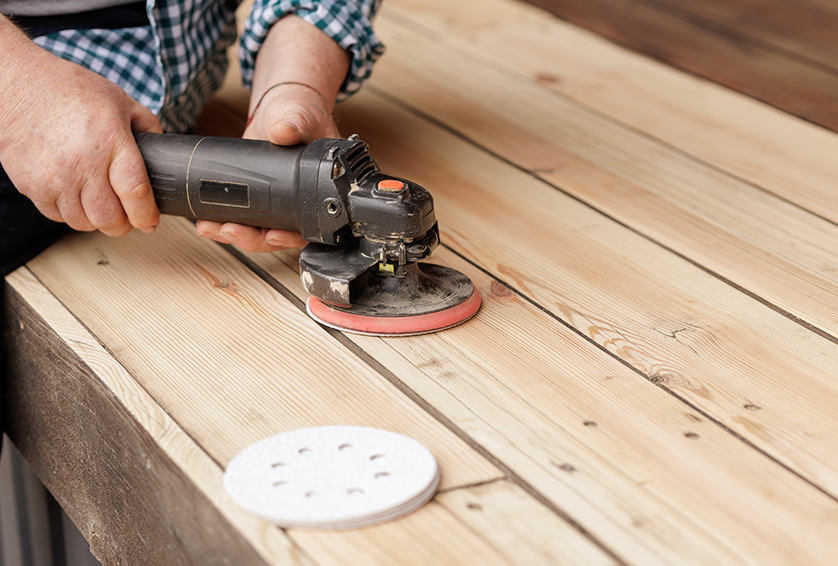
Worn, splintered or deteriorating boards can make your deck look ready for replacement. But the walking surface tells only part of the story. The structure beneath it determines whether deck resurfacing is a worthwhile alternative to starting again. Before committing to either option, you need to know which components can reasonably stay.
Resurfacing can save money when retaining a suitable structure avoids substantial demolition and framing work. When structural problems are extensive, replacing the boards alone can be a poor investment. The useful comparison begins with the deck’s condition and the work required, then moves to the price.
What Changes With Repair, Resurfacing and a Full Rebuild?
Deck repair addresses specific defects, such as an individual damaged board or a connection requiring correction. For this comparison, resurfacing means removing and replacing the walking boards while retaining suitable structural components. It differs from sanding, staining or applying a coating: those treatments change the finish rather than replace the boards. Understanding that distinction helps you ask for estimates that describe the same type of work.
A full rebuild replaces the deck surface and underlying structure, with stairs and railings included according to the agreed scope. Deck replacement therefore involves more than choosing new boards. Limited framing repairs may accompany resurfacing, but extensive structural replacement changes the comparison. An estimate described as “resurfacing” needs to identify those repairs clearly so you understand how much of the original deck will actually remain.
Check the Structure Before Comparing Prices
Keeping the frame is worthwhile only if it remains suitable for the renewed deck. Surface appearance cannot establish that, so assessment needs to address both structural condition and compatibility with the selected decking.
Look Beyond Worn Surface Boards
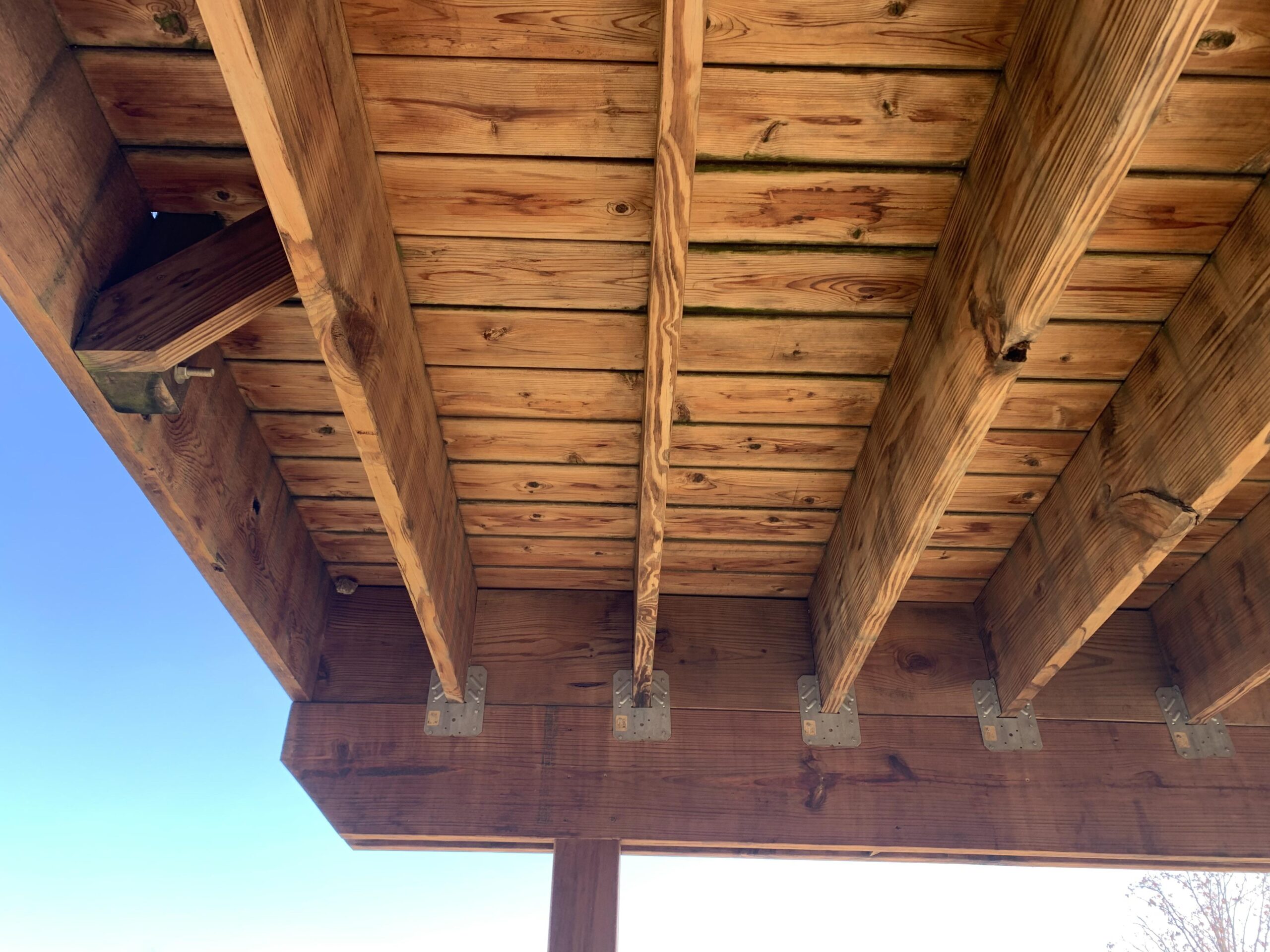
The components requiring consideration include footings, posts, beams, joists and, where the deck attaches to the house, the ledger connection. Stairs and guard connections also belong in the evaluation. The deck evaluation guide shows why checking the walking boards alone leaves important questions unanswered: the supports and connections need attention too.
A limited defect that can be corrected is different from deterioration affecting several structural components. Movement, sagging, visible decay or damaged connections warrant professional evaluation. These observations are useful to report, but they do not establish the repair scope or confirm that the frame can be reused. A homeowner’s visual check should inform the assessment rather than replace it.
Confirm That the Frame Suits the New Decking
An acceptable frame must also suit the boards being installed. Joist spacing, whether the framing provides a level surface, fastening requirements and any additional supporting details are compatibility questions. Checking the existing frame’s suitability against the selected product’s installation guidance is part of determining whether resurfacing is appropriate. Requirements should not be assumed to be identical for every decking product.
New boards do not make the retained structure new or establish how much useful life it has left. Any necessary framing alterations belong in the resurfacing scope before you judge its value. Ask which changes are needed and why. The relevant saving is the work that can actually be avoided after those requirements are accounted for.
When Does Each Option Offer Better Value?
Compare the work needed to produce an appropriate finished deck. Savings from retaining usable components are different from price differences caused by cheaper materials, omitted work or optional design upgrades.
When Resurfacing Can Reduce the Work Required
Deck resurfacing can avoid some structural demolition, new framing materials and associated labour. Those savings depend on retaining a suitable substructure, meaning the supporting structure beneath the boards. Keeping the existing size and layout also matters: resurfacing is a more straightforward comparison when the deck already suits how you want to use it.
Consider an illustrative situation: the walking boards are worn throughout, but an assessment finds the supporting structure suitable for reuse. The homeowner likes the deck’s dimensions and wants to keep its layout. Replacing the surface addresses the main problem without paying to rebuild components that remain usable. Here, retaining the structure has a clear purpose beyond reducing the initial quote.
The estimate still needs to cover removal of the old boards, new decking and fasteners, identified framing corrections, and any included railing or stair work. Ask for these items to be specified rather than grouped under a vague project label. Once included, they may narrow the difference between resurfacing and rebuilding.
When a Full Rebuild May Be the Better Investment
Extensive structural deterioration, unsuitable construction or a substantial layout change can favour a full rebuild. Deck replacement becomes more compelling when little of the existing structure can reasonably be retained. One damaged component does not automatically require replacing everything, however. The extent of the damage and the feasibility of correcting it govern that decision.
For a second illustrative situation, imagine worn boards combined with deterioration across several structural components. A new surface might improve the appearance while leaving substantial work unresolved underneath. If further structural work later requires disturbing the new decking, the homeowner could face repeat labour. That possibility deserves consideration before spending money on the surface, rather than being treated as an inevitable outcome.
Compare written scopes that identify retained and replaced components, decking materials, stairs and railings, removal and disposal, and assumptions about concealed damage. Ask how additional work would be handled if removal exposes further problems. Keep optional redesign features separate from necessary replacement work so the cost of a larger or more elaborate deck does not distort the comparison.
Choose the Project Your Deck Actually Needs
Deck resurfacing can save money when suitable structural components remain worth retaining. Rebuilding becomes more compelling when necessary structural work removes that advantage. Base the decision on an assessment and a defined scope, rather than the surface appearance or the lowest quoted total alone.
At AD Holmes Fence & Deck, we provide custom deck design and installation, with wood and composite options. If you are considering rebuilding, our services give you the opportunity to plan a new deck around the layout and outdoor space you want.
For new deck construction, request a free estimate through our contact form. Describe the existing deck’s condition and the layout you have in mind, including whether you want to keep its current dimensions. We offer free, no-obligation estimates.
Frequently Asked Questions
Does an Older Deck Automatically Need a Full Rebuild?
No. Age provides context, but it does not establish the condition of every component. An assessment should consider deterioration, connections, construction and suitability for the intended work. An older deck may have components worth retaining, while visible structural problems may require substantial replacement. Neither age nor a tidy surface provides a reliable estimate of the structure’s remaining lifespan.
Can I Put New Deck Boards Over the Existing Boards?
Resurfacing as described here involves removing the old walking boards and installing new decking on a suitable frame. Removal provides access to examine framing that the surface previously covered. Simply placing another layer over the boards does not complete that process. Discuss the proposed installation with a qualified professional and follow the requirements for the selected decking system.
Is Composite Decking Required for Resurfacing?
No. Resurfacing describes the work being done, rather than one required material. The selected wood or composite decking must suit the retained frame and applicable installation requirements. Choosing composite does not correct decay, damaged connections or unsuitable framing. Establish whether the structure can be retained before treating a change of decking material as the solution to the deck’s problems.
Related Posts
Recent Works